
More On
June 18, 2026
Wondering whether a historic home in Hendersonville is a charming opportunity or a long-term project? The answer can be both. If you love original details, established streetscapes, and homes with real architectural personality, it helps to know what makes these properties special and what to check before you buy. Here’s what you should know before stepping into Hendersonville’s historic home market.
Hendersonville’s historic housing stock is closely tied to the city’s growth in the late 19th and early 20th centuries. According to the city’s preservation history, the railroad arrived in 1879 and helped drive a wave of residential construction in styles like Queen Anne, Classical Revival, and Colonial Revival.
That growth still shows up today in the city’s established neighborhoods. Hendersonville’s preservation commission maintains seven historic districts, and several of them are especially relevant if you are searching for an older home with distinct character.
Druid Hills was platted in 1923 and is known for curving streets, mature trees, and open spaces. The district includes many Craftsman Bungalow, Tudor Revival, and Colonial Revival homes, with 76 contributing houses and outbuildings identified by the city.
If you are drawn to homes with strong curb appeal and a cohesive neighborhood feel, this area often stands out. Features like porches, traditional setbacks, and established landscaping are part of what gives the district its lasting appeal.
Hyman Heights was first platted in 1908 and expanded after Patton Hospital opened in 1913. The neighborhood includes Craftsman Bungalow, Colonial Revival, Ranch, and Four Square homes.
It also includes Killarney, a stone Gothic Revival house dating to 1858, which the city identifies as the oldest home in the district. For buyers, that mix can mean a range of home ages, layouts, and renovation histories within one area.
Lenox Park began around 1908 and includes a notably intact collection of Queen Anne, Four Square, and two-story gable-front homes. The district also includes later infill from the 1940s and 1950s.
That layered development pattern matters because not every home in a historic area will look or function the same way. You may find a property with older architectural features next to a later home with a simpler footprint.
Cold Spring Park includes homes dating from about 1910 to 1953. The neighborhood is known for regular blocks, front lawns, hillside siting, and fieldstone retaining walls, with Craftsman bungalow as the dominant house type.
Colonial Revival and Ranch homes are also represented. If you are buying in a sloped setting, details like retaining walls and stair access can be just as important as the home itself.
West Side offers one of the broadest style mixes in Hendersonville. The district includes bungalows, cottages, Tudor Revival, Colonial Revival, Dutch Colonial Revival, Four Square, Queen Anne, Shingle Style, Spanish Colonial Revival, Classical Revival, Ranch, Minimal Traditional, and modern homes.
The city notes that most buildings are one story, set in even rows, and that brick is the dominant material. For buyers who want variety and older neighborhood character without a single repeated look, West Side often deserves a closer look.
One of the biggest reasons buyers are drawn to historic Hendersonville homes is that many details are difficult to replicate in newer construction. You may notice mature trees, front porches, brick or stone exteriors, weatherboard siding, hillside stairways, and stone retaining walls.
These are not just cosmetic touches. In many of Hendersonville’s older neighborhoods, those elements help create the overall streetscape and sense of place that buyers respond to right away.
Queen Anne homes often have irregular floor plans, complex rooflines, porches, decorative woodwork, and sometimes turrets. These homes tend to feel visually rich and highly individual.
Colonial Revival homes usually have symmetrical facades and rectangular plans. If you prefer a more balanced, formal exterior, this style may be especially appealing.
Tudor Revival homes often feature steep rooflines, prominent chimneys, and half-timbering or stucco details. They can feel especially distinctive from the street.
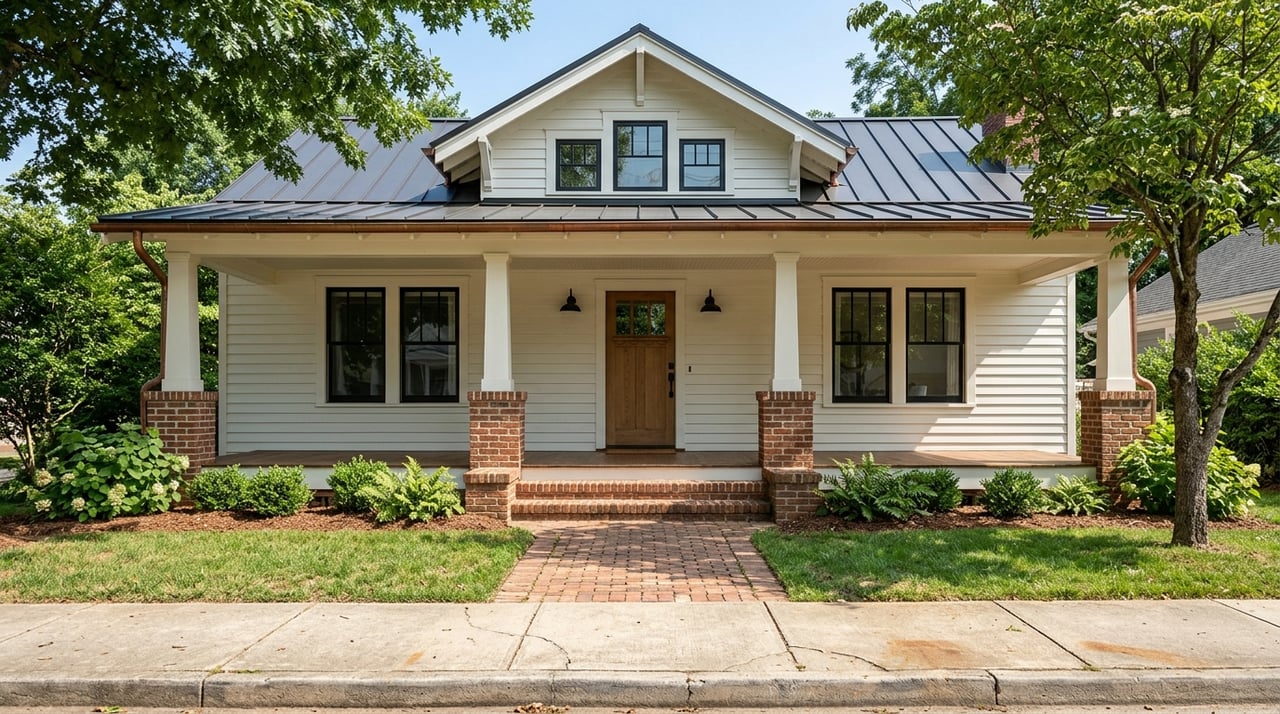
Bungalows typically have broad eaves and inviting front porches. In Hendersonville, this is one of the most recognizable historic forms, especially in neighborhoods like Druid Hills and Cold Spring Park.
Four Square homes are known for their square footprint and practical layout, often with four rooms per floor. They can offer a more straightforward interior flow than some earlier house types.
These simpler postwar forms appear in later infill and mid-century development. If you want an older neighborhood setting with a less ornate house style, these homes may offer that balance.
A common misconception is that a historic home must be fully original to retain value or character. In reality, Hendersonville’s district inventories show that some homes can still be considered contributing even when updates like artificial siding have been added, as long as the original form and key detailing remain.
On the other hand, more visible changes such as porch enclosures, altered window sash, or facade modifications can affect a home’s historic integrity. For you as a buyer, that means it is worth asking not just what has been updated, but how those updates changed the home’s appearance.
Older homes deserve careful due diligence. A home inspection can help you understand the overall condition of the property, estimate the remaining useful life of major systems and finishes, and identify repairs or replacements that may be needed.
With a historic home, it is especially smart to separate visual charm from maintenance needs. Original details can be beautiful, but they should still be evaluated in a practical way.
The city’s historic district inventories repeatedly use windows, porches, siding, roof forms, and additions as markers of whether a house still retains historic integrity. Those same features can also affect your future maintenance costs and renovation plans.
HUD advises buyers to ask whether additional health and safety tests make sense, including radon, mold, asbestos, lead paint, and pest infestations. That guidance is especially relevant when you are purchasing an older home.
Lead-based paint is one of the most important issues to keep in mind. The EPA states that homes built before 1978 are more likely to contain lead-based paint, and deteriorating paint or renovation work that disturbs painted surfaces can create hazardous lead dust.
If you are planning updates after closing, this matters even more. Projects like sanding, window replacement, or other surface-disturbing work should be approached with lead risk in mind.
If you buy in one of Hendersonville’s local historic districts, exterior changes may require a Certificate of Appropriateness, often called a COA. The city says this review process generally applies to local districts such as Druid Hills, Hyman Heights, and Main Street.
The review can cover exterior alterations, restoration, moving or demolishing structures, and significant site or landscaping changes. Normal maintenance that does not change appearance usually does not require a COA, and some minor work may be approved by staff.
This is one of the most important questions to clarify before you buy. If you already know you want to rework windows, alter a porch, change siding, or make noticeable exterior updates, you should understand the approval process early.
Buyers often assume all historic designations work the same way, but they do not. According to the National Park Service, National Register listing by itself places no federal restrictions on a private owner.
In practical terms, a home can be historically significant without being subject to city design review unless it is also in a local overlay district. That distinction can shape what ownership looks like from day one, so it is worth confirming before you move forward.
Some buyers ask whether historic homes come with renovation incentives. In North Carolina, owner-occupied homes that are listed in the National Register, or contributing buildings in a National Register district, may qualify for a 15% state historic rehabilitation tax credit if the project exceeds $10,000 within 24 months and meets the required standards.
The North Carolina Historic Preservation Office also notes that owners should consult the office before beginning work. Because eligibility depends on both the property and the scope of the project, it is best to treat incentives as a possibility to verify, not a built-in benefit.
If you are serious about buying a historic home in Hendersonville, a little extra preparation can go a long way. These homes often reward buyers who look beyond surface charm and ask the right questions early.
A strong approach usually includes:
Historic homes can offer warmth, individuality, and a deeper connection to Hendersonville’s built history. They also benefit from careful evaluation, especially if you want to preserve character while making the home work for your lifestyle.
If you are exploring older homes in Hendersonville and want clear, local guidance on neighborhoods, property condition, and next steps, Amanda Hill can help you navigate the process with confidence.
At Hill Real Estate Group, led by Amanda Hill, luxury is more than a price point—it’s the standard of service you receive. With years of experience and a calm, client-focused approach, Amanda guides you through each step of the process with professionalism and care. Whether buying or selling, you can trust her to deliver a seamless, rewarding experience tailored to your goals.

Hill Real Estate Group
116 N Main St Hendersonville, NC 28792