
More On
August 13, 2026
In January 2025, Rebekah Robinson, assistant director of programs for Conserving Carolina, told the Hendersonville Lightning, "Our goal is to extend the Oklawaha Greenway."
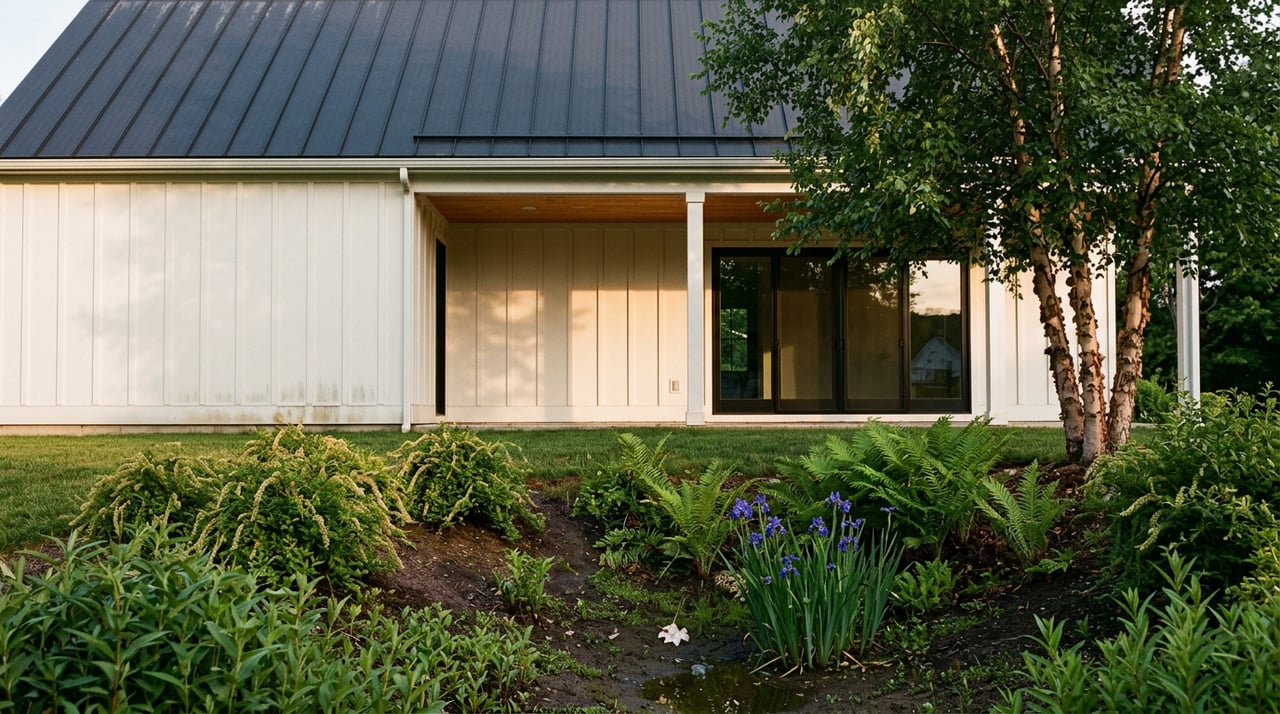
Her organization had just closed on 23.6 acres just south of Jackson Park. If you walk, run, or bike the greenway with any regularity, you already know the soggy stretch near the park that makes this proposed extension distinctive. It's the one that turns to soup after a hard rain, the section past the Pets Own Dog Park entrance where the pavement gives way to standing water and everyone quietly reroutes to the shoulder. Most regulars have made peace with its wet conditions.
It isn't a problem. It's the reason the land was worth buying in the first place.
When Conserving Carolina purchased that acreage south of Jackson Park in January 2025, the pitch wasn't primarily about adding trail miles. The tract carries three acres of wetlands and frontage on two streams, and the nonprofit has been trying to acquire it for over a decade specifically because of what sits underneath the mud. Robinson has said the wetland restoration on the property is designed in part to accommodate flood storage during high stormwater events, easing some of the flooding pressure on the surrounding watershed.
That's the part most trail users never hear. The greenway's soggiest quarter mile, the one everyone treats as an inconvenience, is functioning exactly as intended. It's supposed to hold water. A paved path that never flooded there would mean the wetland underneath it had failed at its actual job.
The city's long-range planning manager, Matthew Manley, has tied this parcel to something bigger called Above the Mud, an umbrella term the City of Hendersonville uses for four separate infrastructure projects meant to link up at the neighborhood, city, and regional level. The greenway extension isn't a standalone amenity being bolted onto the parks system. It's one piece of a larger effort to manage water and connectivity at the same time, on the same acreage, using the same wetlands that make certain stretches inconvenient to walk after a storm.
If you've ever wondered why the route hasn't simply been paved through and called it done, the wetlands help explain why. Robinson herself has noted that some of the extension may need to be built as elevated boardwalk rather than trail on the ground, because a wetland this ecologically active can't simply be filled and flattened without giving up the thing that made it valuable to protect.
None of this would matter as much if the land weren't already doing serious ecological work. Jackson Park is one of the most active birding locations in Henderson County. Birders using eBird have logged 220 species there, spanning ducks, sandpipers, herons, hawks, woodpeckers, songbirds, and owls. That count predates the new acquisition. The 23.6 acres to the south connects directly to those existing wetlands, which is part of why Conserving Carolina wanted it rather than settling for a more convenient route along a sewer easement, which had been the long-assumed path for years.
Friends of the Oklawaha Greenway has built out a dedicated Birding Trail along the corridor, and a stretch of the old boardwalk near the kiosk, closed for years because it was structurally unsound, has been kept in a limited form specifically to serve as a viewing platform near Patton Park rather than torn out entirely. That's a small decision, but it tells you something about how the people managing this trail think. When a piece of infrastructure fails, the response isn't always to remove it. Sometimes it's to keep the part that still serves the birds and let the rest go.
The greenway you walk today, the 3.5 miles connecting Jackson Park, Patton Park, Berkeley Mills Park, Sullivan Park, and William H. King Memorial Park, is a fraction of what's been studied. Henderson County has commissioned feasibility work through the Asheville-based firm Equinox looking at roughly 14.65 miles of additional greenway stretching both north and south of the existing corridor. Added to what's already built, that would put the total system close to an 18-mile spine running through Henderson County, Fletcher, Mills River, Hendersonville, and Flat Rock.
The two directions aren't equally far along. To the south, the newly acquired wetland tract is meant to eventually thread a connection toward Blue Ridge Community College, following streams and restored marsh rather than the sewer easement planners once assumed would be the only option. To the north, the studied route would extend toward Westfeldt Park, near the Sierra Nevada Brewing Company property, a segment that exists on paper as a feasibility study rather than anything under construction.
None of this happens on a fixed timeline. Henderson County's greenway planning has faced delays related to parking spaces and property rights concerns, and the current extension work is proceeding parcel by parcel as landowners agree to sell or grant easements, not as a single funded project with a ribbon-cutting date attached. If you've watched this process for any length of time, you already know that the gap between "a route has been identified" and "pavement exists" can run for years.
One longtime resident also supported the Jackson Park acquisition. Suzanne Hale retired to Hendersonville with her husband in 2010 after a career that included serving as U.S. ambassador to Micronesia and working for the USDA in Asia. She's been active with Friends of the Oklawaha Greenway for years, including a stint chairing the group, and she made a significant personal donation toward the purchase of the wetland tract.
Her connection to the property runs deeper than fundraising. Hale's research, developed with storyteller Ronnie Pepper, helped surface new detail on the Kingdom of the Happy Land, a piece of local Black history tied to this same stretch of Henderson County. That research fed into the novel Happy Land by Dolen Perkins-Valdez. It's not the kind of fact that shows up on a trail map, but it's part of the history of this particular acreage.
That's the pattern worth sitting with. The muddy quarter mile past the dog park, the birding platform that survived when the rest of the boardwalk didn't, the 23 acres bought for wetlands as much as for pavement, the history uncovered almost by accident along the way. None of it reads as a single finished project. It reads as a trail that keeps absorbing more of what the land and the people around it were already doing, one purchase and one advocate at a time.
Next time you're rerouting around standing water near Jackson Park, you'll know it isn't a maintenance backlog. It's a wetland doing the job it was bought to do, with a longer trail slowly taking shape around it.
If you're already a regular on this trail and find yourself thinking about what a home near Jackson Park, Berkeley Mills, or any other stretch of the greenway might be worth, Hill Real Estate Group offers a complimentary home valuation with no pressure attached. Amanda Hill has spent two decades getting to know this county one park bench and one property line at a time, and she's glad to talk through what your specific spot on the map is doing in today's market.


At Hill Real Estate Group, led by Amanda Hill, luxury is more than a price point—it’s the standard of service you receive. With years of experience and a calm, client-focused approach, Amanda guides you through each step of the process with professionalism and care. Whether buying or selling, you can trust her to deliver a seamless, rewarding experience tailored to your goals.
Hill Real Estate Group
116 N Main St Hendersonville, NC 28792